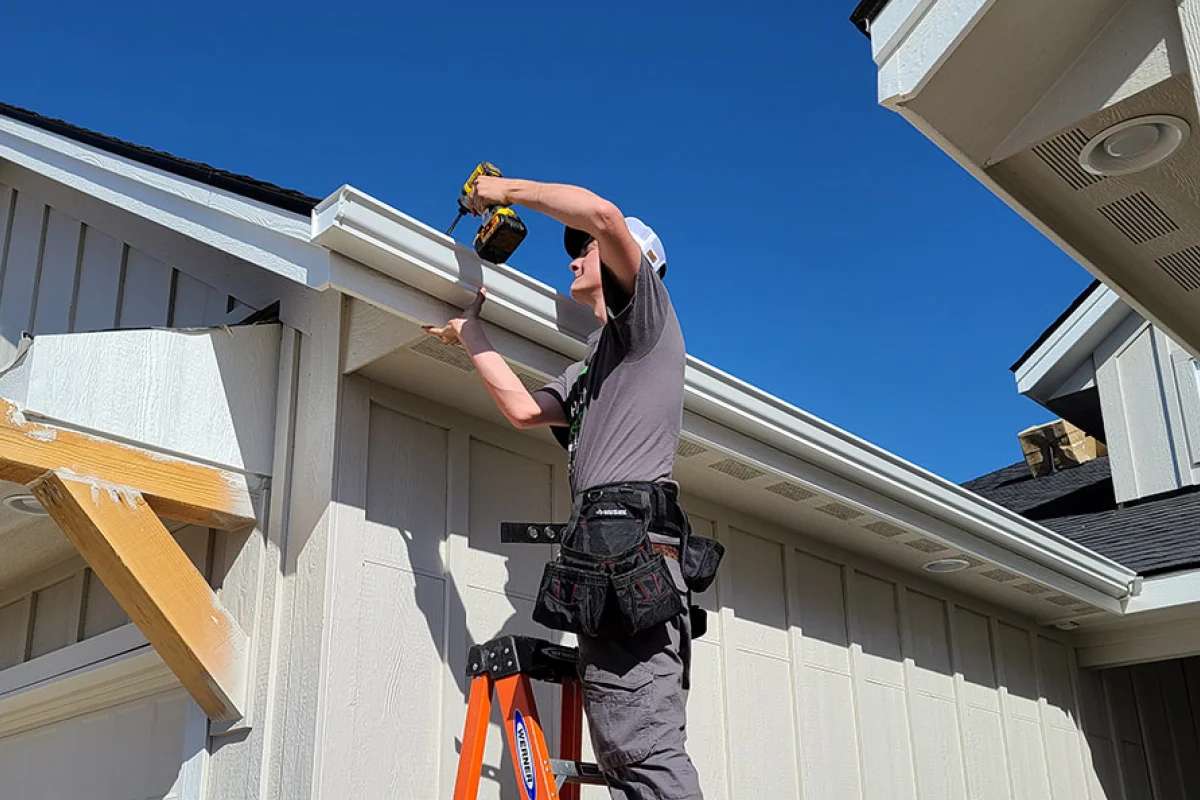
Learn how gutter repair in West Columbia, SC can address leaks, sagging sections, loose connections, drainage problems, and damaged downspouts.
Gutters are designed to collect roof runoff and guide it toward downspouts, but even a small defect can interfere with that process. Leaking joints, sagging sections, loose fasteners, damaged downspouts, and clogged areas can cause water to spill where it should not. WW Gutters provides residential and commercial gutter installation, repair, cleaning, and diagnostic services across Columbia and surrounding South Carolina communities. Repairing an existing system can often be a practical option when the gutters remain structurally usable but have localized problems that affect drainage. Homeowners in West Columbia, Lexington, and nearby areas should pay attention to changes in how water moves during rainfall, especially overflow, visible leaks, sections pulling away from the roofline, or water collecting near the property. This guide explains common gutter problems, repair methods, downspout concerns, inspection priorities, maintenance, and how to determine whether repair or replacement makes more sense.
Common Signs Your Gutters Need Repair
Gutter problems often become most noticeable during or shortly after rainfall.
Water Leaking From Joints
Sections of a gutter system are connected at seams, corners, outlets, and downspout transitions. These areas may develop leaks when seals deteriorate, connections loosen, or components shift.
Small leaks should not automatically be ignored because repeated water discharge can affect nearby siding, fascia, landscaping, or soil.
Gutters Pulling Away
A gutter that begins separating from the roof edge may have loose fasteners, damaged supports, excessive debris weight, or another structural problem.
Sagging can also affect slope, preventing water from flowing correctly toward the downspout.
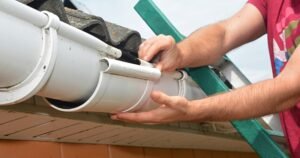
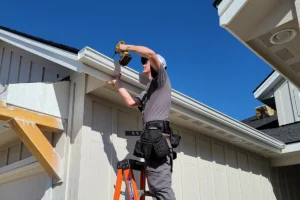
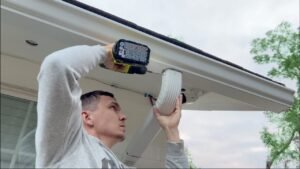
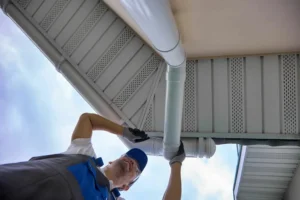
Professional gutter repair can address issues such as leaks, sagging sections, loose fasteners, drainage concerns, and damaged parts on residential and commercial systems.
Why Proper Gutter Slope Matters
A gutter does not need to look dramatically tilted to move water. A controlled slope helps runoff travel toward the outlet and downspout.
Standing Water Inside Gutters
Water remaining inside a gutter after rainfall may indicate a drainage obstruction or incorrect slope.
Standing water adds unnecessary weight and can place additional stress on hangers and attachment points.
Before adjusting the gutter, the system should be checked for clogs because debris can create similar symptoms.
Overflow at the Wrong End
If water repeatedly spills from a section away from the downspout, the gutter may not be directing runoff properly.
An inspection can determine whether the cause is poor slope, excessive roof runoff, a clogged outlet, or another problem.
Repair decisions should address the actual cause rather than simply sealing the location where water is visible.
Repairing Sagging and Loose Gutter Sections
A properly supported gutter should remain aligned along the roof edge.
Loose Fasteners and Hangers
Fasteners and hangers hold the gutter system in position. When they loosen, sections may drop or pull away from the fascia.
The repair may involve securing or replacing affected hardware, depending on the condition of the gutter and attachment surface.
The surrounding fascia should also be evaluated if the hardware no longer holds securely.
Misaligned Sections
Gutters can shift over time or after physical damage.
Even modest movement can create low areas that collect water. Realignment may restore the intended drainage path when the gutter material itself remains usable.
If a section is badly bent or damaged, replacing only that portion may be more appropriate than trying to reshape it repeatedly.
Understanding Downspout Problems
The downspout is a critical part of the drainage system because it carries water away from the gutter outlet.
Clogged Downspouts
Leaves, roof debris, twigs, and other material can collect near the outlet or inside the downspout.
A blockage may cause water to back up into the gutter even when the horizontal sections are otherwise in good condition.
Cleaning the gutter without checking the downspout can leave the main drainage problem unresolved.
Loose or Damaged Connections
Downspout sections can separate at elbows or joints.
When this happens, water may discharge against the wall or collect near the building rather than following the intended path.
Connections should remain secure from the gutter outlet through the lower discharge point.
Poor Water Discharge
A downspout may technically be working while still releasing water in an undesirable location.
The complete drainage path should be considered, including where water leaves the lower section and how it moves away from the property.
Gutter Repair in West Columbia, SC
WW Gutters’ West Columbia page specifically supports repairs for leaking and sagging gutters along with downspout adjustments and full gutter-system inspections.
Property owners considering gutter repair services in West Columbia, SC should watch for overflow, loose sections, leaks, misaligned downspouts, and water that does not move through the system as expected.
Residential Gutter Problems
Homes can develop gutter issues because of debris buildup, loose hardware, damaged sections, aging seals, or physical movement.
The repair should begin with identifying whether the problem is isolated or affecting several parts of the system.
If most of the gutters remain secure and properly aligned, targeted work may restore normal drainage without replacing everything.
Commercial Gutter Repairs
Commercial properties may have longer rooflines, larger drainage areas, and different access requirements.
Repair planning should consider how much roof runoff the system receives and whether damaged areas are affecting other sections.
Regular visual checks can help building owners notice changes before a small repair develops into a larger drainage concern.
Gutter Repair Services in Lexington, SC
WW Gutters also provides installation, repair, cleaning, leak detection, sealing, downspout adjustment, and related gutter work in Lexington.
Homeowners looking for gutter repair and Installation services in Lexington, SC should consider the condition of the complete system rather than focusing only on one visible leak.
Check Corners and Seams
Corners and connection points deserve attention because they are common locations for visible water leakage.
A technician can determine whether sealing, adjustment, component replacement, or another repair is appropriate.
Review the Downspouts
If gutters are overflowing even though the channels appear relatively clear, downspouts and outlets should be checked.
A restriction farther down the drainage path can cause water to back up and spill over the gutter edge.
Inspect After Noticeable Damage
If a section appears bent, separated, or lower than neighboring areas, an inspection can determine whether supports or gutter material have been affected.
Addressing the changed section can help prevent additional movement.
Gutter Repair Versus Full Replacement
Not every damaged gutter system requires complete replacement.
When Repair May Make Sense
Repair may be practical when the majority of the gutter system remains structurally sound and the problem is concentrated in a limited area.
Examples can include an isolated leaking connection, several loose hangers, a damaged downspout section, or a localized alignment problem.
The actual condition of the system should determine the recommendation.
When Replacement May Be Considered
A system with widespread deterioration, repeated failures, extensive deformation, or many damaged sections may require a broader solution.
Continually repairing different sections can become less practical when the underlying system is no longer performing consistently.
A contractor should explain whether the problem can reasonably be isolated or whether it affects the gutter system as a whole.
How Gutter Cleaning Supports Repairs
Debris can hide damage and create symptoms that resemble structural problems.
Clear the Drainage Path
Leaves and other material may prevent water from reaching downspouts.
Cleaning the system gives the contractor a clearer view of joints, hangers, outlets, and gutter surfaces.
It also makes it easier to test whether water flows correctly after repairs are completed.
Identify Problems Under Debris
Heavy buildup can conceal seams, small openings, or areas where water has been standing.
Removing debris before evaluating repair needs can provide a more accurate picture of the system.
Cleaning and repair serve different purposes, but they often work together when drainage problems are being investigated.
Maintaining Gutters After Repair
A repaired gutter system still needs periodic attention.
Check for Returning Leaks
After repairs, homeowners should observe how the gutter performs during future rainfall when it is safe to do so from the ground.
A returning leak may indicate that another connection or nearby section also needs attention.
Keep Gutters and Downspouts Clear
Debris buildup can create additional weight and interfere with drainage.
Cleaning frequency depends on surrounding trees, roof conditions, and how quickly material accumulates.
The system should be checked based on actual conditions rather than relying on the same schedule for every property.
Watch for Movement
Look for sections that begin separating from the fascia, changing alignment, or sagging.
Early attention to loose hardware may help prevent a larger portion of the gutter from shifting.
Choosing a Gutter Repair Contractor
A useful repair plan should explain both the visible problem and its likely cause.
Ask What Is Actually Damaged
A leaking gutter may need sealing, adjustment, hardware replacement, or section replacement depending on the source.
Ask which component is failing rather than accepting a general description of the problem.
Discuss the Full Drainage System
The contractor should consider gutters, outlets, downspouts, connections, and overall water flow.
Fixing a leak while ignoring a clogged downspout may not correct the drainage issue that contributed to the problem.
Understand Repair Versus Replacement
If replacement is recommended, ask why repair is not considered practical.
Likewise, if repair is recommended, understand which components will remain and what work will be performed.
Clear information helps property owners make decisions based on the actual system condition.
Conclusion
Gutter repair can restore proper drainage when leaks, sagging sections, loose hardware, damaged downspouts, or alignment problems interfere with the way roof runoff moves around a property. The correct repair begins with finding the source of the problem instead of treating only the most visible symptom.
For property owners in West Columbia and Lexington, the entire drainage path should be considered. Gutters, seams, hangers, outlets, and downspouts all work together, so a problem in one component can affect another part of the system.
Localized damage may often be addressed through targeted repairs, while widespread deterioration may justify discussing replacement. Keeping gutters clear and monitoring repaired areas can also help identify new problems earlier.
A thorough inspection, clear repair scope, and attention to water flow can help homeowners and commercial property owners maintain a gutter system that continues directing roof runoff where it is intended to go.
Frequently Asked Questions
What are common signs that gutters need repair?
Common signs include leaking joints, sagging sections, loose gutters, standing water, damaged downspouts, overflow, and sections pulling away from the roofline.
Can a leaking gutter be repaired without replacing the entire system?
Often, yes. If the problem is limited to a seam, connection, fastener, or small damaged section, targeted repair may be possible. The overall gutter condition should be evaluated first.
Why are my gutters sagging?
Sagging can result from loose hangers, damaged attachment points, excessive debris weight, standing water, or alignment problems. An inspection can identify the specific cause.
Can a clogged downspout cause gutter overflow?
Yes. If water cannot move through the downspout, it can back up into the gutter and spill over the edge even when other sections appear clear.
When should gutters be replaced instead of repaired?
Replacement may be considered when damage is widespread, multiple sections repeatedly fail, or the existing system is too deteriorated for dependable localized repairs.
How can I reduce future gutter problems?
Keep gutters and downspouts clear, watch for leaks or sagging, check for loose sections, and have drainage problems evaluated before they spread to larger portions of the system.