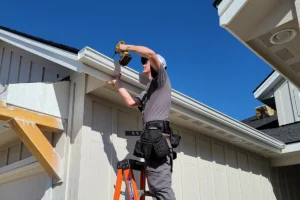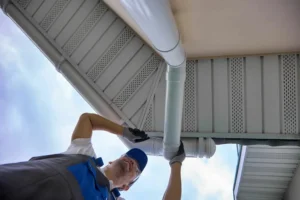
Learn how professional gutter services in Camden, SC support installation, maintenance, drainage, downspouts, inspections, repairs, and property protection.
A dependable gutter system does more than collect rainwater along the edge of a roof. Gutters, downspouts, outlets, hangers, seams, and drainage points must work together to move runoff away from areas where repeated water exposure can create problems. WW Gutters provides residential and commercial gutter services throughout Columbia and surrounding South Carolina communities, including installation, repair, cleaning, maintenance, and drainage-related work. Property owners may need professional gutter service when an older system begins leaking, water overflows during rain, downspouts stop draining correctly, sections sag, or a new property needs a complete system. The right solution depends on roofline dimensions, drainage needs, existing gutter condition, downspout placement, and the way water moves around the building. For homeowners and businesses in Camden, Chapin, and nearby communities, evaluating the complete drainage system can help determine whether maintenance, localized repair, adjustment, or replacement is the most practical next step.
What a Professional Gutter Company Can Handle
A professional gutter company can support several stages of gutter ownership, from planning a new system to maintaining or repairing gutters that are already installed.
New gutter work may involve measuring rooflines, determining gutter lengths, identifying corners, planning outlets, and selecting appropriate downspout locations. Existing systems may require inspections, cleaning, leak repairs, hardware adjustments, or replacement of damaged sections.
The most useful service begins by understanding the problem rather than automatically assuming every property needs new gutters.
A system that overflows may simply have a blockage. Another property may have sections that no longer maintain the correct alignment. In other cases, widespread deterioration can make replacement more reasonable than continuing to repair individual areas.
Residential and commercial properties also have different roof sizes and drainage demands, which means gutter planning should reflect the actual structure.
How Gutters Manage Roof Runoff
Rainwater moves from the roof surface toward the edges, where gutters collect it and guide it toward outlets and downspouts.
For this process to work, the system needs a continuous drainage path.
Gutter channels should remain reasonably clear, outlets should allow water to enter downspouts, and the downspouts need to carry water toward the intended discharge areas.
A problem anywhere along that route can affect another section.
For example, a blocked downspout can cause water to back up into a gutter that is otherwise in good condition. A low section may hold water even when there is no debris. A leaking corner may allow water to escape before it reaches the outlet.
Professional evaluation should therefore follow the complete path of water rather than focusing only on the first visible symptom.
Professional Gutter Services in Camden, SC
Property owners seeking professional gutter services in Camden, SC may need help with a new system, an older gutter installation, drainage concerns, or ongoing property maintenance.
A new installation should begin with measurements and an evaluation of the roofline. Downspout placement should be considered at the same time because a gutter is only useful when collected water has an appropriate route away from the roof edge.
Existing homes may have older systems with several different conditions. One section may remain secure while another begins sagging or leaking.
Rather than automatically replacing everything, the system can be evaluated to determine which parts remain usable.
Property owners should also pay attention to what happens during rain. Overflow at one corner, water behind the gutter, or runoff that misses the system completely can provide useful information during an inspection.
Commercial properties may require the same basic services but across larger roof areas with different access and drainage requirements.
Gutter Company Services in Chapin, SC
WW Gutters’ Chapin page supports installation, repairs, cleaning, troubleshooting, downspout replacement, and gutter guard work for homes and small businesses.
Property owners considering gutter company services in Chapin, SC should evaluate whether the current system needs routine maintenance or more involved work.
A gutter that is structurally sound but filled with leaves may primarily need cleaning. A section pulling away from the roofline may require hardware or attachment repairs. Water that remains inside the gutter after rain may indicate blockage, slope, or alignment concerns.
The most practical recommendation should match the actual condition.
For small businesses, gutter problems can also affect entrances, sidewalks, landscaping, loading areas, and other spaces used by customers or employees.
Keeping drainage controlled around these areas can be part of normal property maintenance rather than waiting for a major failure.
Planning a New Gutter System
New gutters should be planned around the property rather than purchased only by visual preference.
Roofline length and configuration affect how much gutter material is required. Corners, valleys, additions, porches, and other building features can influence where water reaches the gutter system.
Downspouts should be placed where they can receive runoff and discharge it appropriately.
The gutter system also needs secure attachment along the roofline. Hangers and other hardware support the channels while they carry water.
Seamless gutters are commonly considered because long sections can be formed with fewer joints along straight roof runs. Corners, outlets, and other transitions still require careful installation.
Color and appearance can be considered after the functional layout is understood.
A well-planned system should complement the building while maintaining a clear path for roof runoff.
Signs an Existing Gutter System Needs Service
Gutter problems often become easiest to notice during or shortly after rainfall.
Overflow can indicate debris, a blocked outlet, a clogged downspout, improper slope, or another drainage issue.
Sagging sections may develop when hangers loosen, attachment points weaken, or accumulated debris and standing water add weight.
Leaks commonly appear around seams, corners, outlets, or damaged gutter material.
Water marks on siding or around the roof edge can also indicate that runoff is leaving the system somewhere it should not.
Downspouts deserve equal attention. A loose connection, crushed section, or internal obstruction can affect the entire gutter run connected to it.
Homeowners should observe these changes from the ground rather than climbing onto wet roofs or unstable ladders unnecessarily.
Gutter Maintenance and Cleaning
Regular maintenance helps keep the system open enough for water to move through it.
Leaves, pine needles, roof grit, twigs, and other material can gradually build up inside gutters and near outlets.
The necessary cleaning frequency depends on surrounding trees, roof design, and how quickly debris accumulates at the property.
A fixed schedule may work for one home while another property needs attention more often.
Cleaning should also include checking downspouts because a clear gutter channel can still overflow when the vertical drainage path is blocked.
Maintenance visits can provide an opportunity to notice loose hangers, leaking joints, or other visible problems while the system is accessible.
Cleaning does not replace repair, but it can make actual damage easier to identify.
Repair Versus Gutter Replacement
Not every gutter problem requires a full replacement.
Localized leaks, loose hardware, damaged downspout sections, or limited alignment problems may sometimes be repaired when the rest of the system remains serviceable.
Replacement becomes more practical when problems are widespread.
A gutter system with many failing sections, repeated leaks, significant deformation, or widespread attachment problems may require more work than a series of small repairs can reasonably address.
Property owners should ask which components can remain and why particular sections need replacement.
The age of the system can provide context, but visible condition and performance should drive the decision.
A newer gutter damaged in one location may still be a good repair candidate, while an older system can sometimes remain serviceable when it has been maintained and most components remain secure.
Downspouts Are Part of the Complete System
Gutters receive much of the attention because they are visible along the roofline, but downspouts complete the drainage path.
An outlet allows water to leave the gutter and enter the downspout. From there, connected sections guide runoff toward the lower discharge point.
If a downspout becomes clogged, water can back up into the gutter.
Loose connections can allow water to escape against walls or other areas of the property.
The final discharge location also matters. Water should not simply leave the downspout and immediately collect where it creates another drainage concern.
During professional gutter service, downspouts should be considered alongside channels, hangers, seams, and outlets rather than being treated as unrelated accessories.
Gutter Guards and Debris Control
Gutter guards may help reduce the amount of larger debris entering a gutter system.
They can be useful on properties where leaves or other materials frequently collect along the roofline.
However, guards do not mean the system never needs attention.
Small debris can still enter certain systems, material can collect on top of guards, and downspouts or drainage areas can still require inspection.
A guard system should also match the existing gutters and roof conditions.
Property owners should understand what maintenance remains necessary after installation.
The goal should be to reduce recurring debris problems while preserving normal water flow rather than assuming guards completely eliminate future gutter service.
Residential and Commercial Gutter Needs
Homes and commercial buildings use gutters for the same basic purpose, but the scale and design can differ.
Residential properties may have multiple rooflines, porches, additions, garages, or landscaping that affect drainage planning.
Commercial buildings can have longer roof runs, larger drainage areas, different access requirements, and spaces below the roof that remain active during service.
Business owners may also need work coordinated around customers, employees, parking, or entrances.
A contractor should understand how the property operates before beginning larger repair or installation work.
The system should ultimately be planned around roof runoff and drainage requirements rather than simply copying the layout used on another building.
Choosing a Professional Gutter Company
A gutter contractor should be able to explain what is happening with the system and why a particular service is recommended.
For new installations, ask how measurements, slope, outlets, and downspouts will be planned.
For existing systems, ask whether the problem is isolated or widespread.
Property owners should also understand whether cleaning, repair, adjustment, or replacement is included in the proposed work.
If water is collecting near a specific part of the property, mention that during the inspection.
A useful gutter assessment considers where water enters the system, how it travels through the channels, and where it leaves the downspouts.
Clear communication about the project scope can help homeowners and businesses understand which components are being serviced and which will remain in place.
Conclusion
A professional gutter company can help property owners plan new installations, maintain existing systems, diagnose drainage concerns, repair damaged sections, and determine when replacement is appropriate.
For properties in Camden and Chapin, gutters should be evaluated as complete drainage systems that include channels, hangers, seams, outlets, downspouts, and discharge areas.
Overflow, leaks, sagging, standing water, or poor downspout performance can each have different causes, making accurate inspection important before work begins.
Routine cleaning can help prevent debris-related restrictions, while targeted repairs may extend the usefulness of systems that remain structurally sound.
When problems become widespread, replacement can provide an opportunity to improve the complete layout rather than continuing to repair failing sections individually.
By matching gutter service to the actual condition of the property, homeowners and businesses can maintain a clearer path for roof runoff and reduce recurring drainage problems.
Frequently Asked Questions
What services can a professional gutter company provide?
Services may include new gutter installation, repair, cleaning, troubleshooting, downspout work, maintenance, gutter guards, and replacement of damaged or aging systems.
Why do gutters overflow during rain?
Overflow can result from debris, clogged downspouts, blocked outlets, incorrect slope, sagging sections, or other drainage problems.
Do all leaking gutters need to be replaced?
No. Some localized leaks can be repaired when the surrounding gutter material remains in suitable condition.
Why are downspouts important?
Downspouts carry collected roof runoff from the gutter toward the final discharge area. Blockages or damaged sections can cause water to back up or drain incorrectly.
Do gutter guards eliminate the need for gutter maintenance?
No. Guards can reduce certain debris, but the gutter system and downspouts should still be inspected and maintained when needed.
How do I know whether to repair or replace my gutters?
Localized problems may be suitable for repair, while widespread leaks, deformation, repeated failures, or significant deterioration may make replacement more practical.