
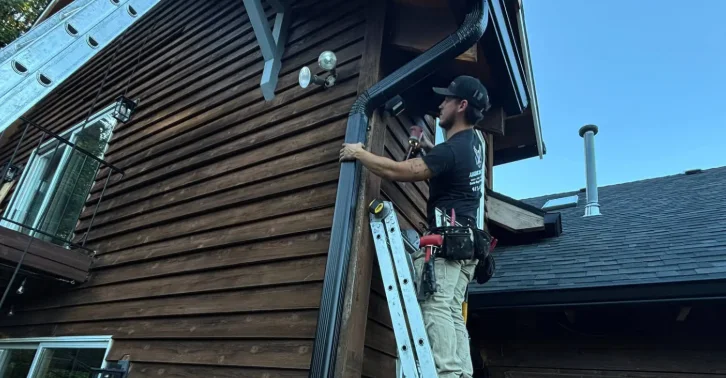
Start by checking how much gutters cost to put Affordable Gutter Installation in around Columbia. Look at what each material takes – like long sheets of metal, plastic pieces, or heavy-duty copper. One thing after another, see how they go up on a house. Some roll smoothly without joints, others snap together piece by piece. Each type handles rainwater in its own way. See which fits the shape of your roof best.
Most people think gutters just handle roof runoff. Yet in Columbia, SC, sudden downpours can unload heavy sheets of water within minutes – while autumn brings thick layers of fallen pine needles that block flow paths. A working setup keeps moisture away from critical areas. When missing, puddles form near walls, dirt washes downhill, and damp seepage finds its way below ground level.
Out there where rain piles up, gutters need to do more than just hang around. Measuring every angle comes first, then shaping each piece so it fits like it was made for the house – because it was. Moisture loves to linger in Columbia air, so aluminum might twist while copper holds strong against time. Heavy storms roll through spring and fall, dumping water fast, which means sloping matters as much as sealing. A pro who’s seen split-levels on Devine Street knows how ice isn’t the worry – but pooling is. Ranch homes sit low but spread wide, asking for longer runs without sags. Two-stories climb high, making downspouts work harder when wind pushes sheets sideways. Planning starts before shovels touch dirt – it lives in choices about joints, pitch, and who shows up with the right tools.
Gutter Materials That Work Well in the Midlands
Some gutters fit certain houses better than others. Pick one based on cost, roof shape, also how many years you’ll live there.
Of course, price tags matter when choosing gutters. Vinyl ones happen to cost less than others. Their budget-friendly nature shows up right away at purchase time
Starting at just under four bucks a foot once set up, these units arrive in parts meant to click into place. Easy on the wallet, they suit those watching expenses closely. Light enough to handle solo, most folks manage installation without help. Yet toughness takes a hit here. When summer humidity hits in Columbia, the material bends out of shape. Cold spells make it stiff, prone to cracking. Every ten feet, joints appear where sections meet – weak spots where water might sneak through. With constant care, life spans stretch between one and two decades.
Aluminum without seams shows up most often in houses around Columbia. What do you see everywhere? That’s it.
For every foot along the edge, price runs between six and fifteen dollars once set in place, shaped right there to fit how your roof lines up. Because it flows without joints, water has less chance to escape through gaps. This metal stands up to damp weather, shrugs off downpours, won’t corrode like steel can, and shows up in many shades you might pick. One certified worker based in Columbia says nearly all houses they work on across the Midlands go with this kind – mostly due to how well it mixes value, strength, and look. If kept clean and clear, such a system holds strong for two to three decades.Professional Gutter Installation in around Columbia
Priced between six thirty-three and six ninety-four dollars each foot runs galvanized steel. A single segment measures out by the linear foot cost-wise
Steel holds up better when hit by tree limbs or tools. Yet it can start to corrode over time. Because of the damp air in Columbia, these gutters must be painted often and checked closely. Without care, rust spreads fast. Many people go with aluminum instead. Only those near lots of trees tend to pick steel.
The New Way To Install Gutters Step By Step
Start right – gutters need each stage done just so. Miss anything? Water pools, sections droop, they quit fast.
Start by checking what’s there. Then figure out how much you’ve got
Starting at the edge, a contractor moves along your roofline, jotting down how long each section runs while tallying corners, end caps, and spots for downspouts. Over in Columbia, a close look at fascia boards is standard – constant dampness eats away at wood, so drooping gutters might hint at hidden rot underneath. Roof steepness and total area get measured next; that info shapes estimates on rainwater flow, pointing toward either 5-inch or larger 6-inch gutter systems. What lies above affects what goes below.
Picking what it’s made of happens first, then lining up the right shades follows after
Start by picking how wide the gutters should be, what they’re made of, and their shade. While many houses around Columbia go with 5-inch K-shaped ones, bigger rooftops or steeper slopes might call for 6 inches when rain pours hard. Water flows through downspouts set in spots meant to push runoff far from the base of the house. Firms such as WW Gutters, working on fresh fits throughout Columbia, give swatches that line up with common wall coverings and edge tones seen across the Midlands.Top Gutter Installation in around Columbia
Fabrication kicks in once smooth integration is needed
Out at the work area, a machine bends flat aluminum coils into long gutters right where they’re needed. Because it forms them on location, there are no joints showing on level sections. Every section matches the precise span of your rooftop’s perimeter. Instead of separate parts joining up, solid ends get added, turns are shaped neatly, openings for downspouts appear through stamping then closed tightly.
Once the last check is done, sweeping up finishes things off
A small tool shows the slope while water runs through to see how well it moves. Old pieces come down first when swapping them out, then everything gets tidied up afterward. Instructions for keeping things working go hand in hand with the finished job. When spring brings thick layers of yellow dust from pines or autumn drops heavy loads of oak litter, a screen might be suggested just to help it last longer.
Cost of New Gutters in Columbia
Pricing in Columbia moves along with much of South Carolina – steady when set beside coastal spots or higher terrain. A bit less intense where dollars stretch further.
Most homes between 1,500 square feet usually see prices from $1,000 up to $2,500 when installing a full smooth aluminum setup. Bigger houses at 2,500 square feet or past that mark often go from $2,500 into the $5,000 range – or higher. Materials show up in those numbers, along with work fees, downspouts, plus standard fittings.
Each foot of length comes with its own price tag, laid out here.
A single vinyl section might cost as little as three seventy-eight or go up to four fifty-seven. Moving to seamless aluminum, prices stretch from six dollars into fifteen. Steel coated in zinc sits between six thirty-three and six ninety-four. When it comes to copper, expect a jump – twenty-six sixty-one through twenty-eight forty-three. Adding gutter protection during setup? That extra step brings seven eighteen down to six seventy-five for each foot covered.Right Gutter Installation in around Columbia
Several factors push costs higher in Columbia specifically.
Up top, two-level houses mean taller ladders plus extra hands on deck. Roof shapes full of dips and edges take more pieces and stretch the clock. Fixing the fascia? That runs between five and twelve bucks for each foot. When a house sits in an old-town zone, oddball parts or special trim might be needed to pass the design check.
Workers’ pay takes up between four tenths and six tenths of overall expenses
Gutter work in South Carolina runs between forty and sixty dollars each hour. One full day usually covers a regular single-level house. Bigger homes, or ones with tricky rooflines, often need two days instead. The time depends on layout, not just size.
Gutter guards are a smart add-on in Columbia.
At six seventy-five up to seven eighteen each foot once set in place, they cut down how often you need to clean. When pines drop their mess all over town, these barriers cover their own price just by blocking blockages and spills.
Choosing a Gutter Installer in Columbia
A person carrying a ladder might not know how to set up gutters right. Though South Carolina does not require special licensing for these jobs, trustworthy crews are covered by liability protection and worker injury policies.
Someone installing gutters in Columbia – say, a company such as WW Gutters – has likely dealt with heavy spring rains before. Because of past jobs, they grasp how damp air wears down wood trim and fasteners. When heat bakes surfaces one day then cools overnight, these crews pick metals that won’t crack. Their work includes coverage most independent workers fail to obtain.
Ask these questions before hiring:
- Got general liability coverage? What about workers’ comp?
- Can I get a detailed quote showing each cost separately?
- What material do you recommend for Columbia’s climate, and why?
- Is there a guarantee covering how the job is done when things get put in place?
- Got any examples from your latest Columbia jobs cleaning gutters?
Watch out for anyone avoiding straight answers, tossing around loose numbers by mouth alone, yet pushing full replacement without considering what you actually need. Trusted pros in Columbia hand over clear paperwork, talk through why certain materials make sense, while leaving room for your own choice depending on money matters plus daily demands.Reliable Gutter Installation in around Columbia
Frequently Asked Questions
What’s the price tag on fresh gutters in Columbia?
Most homes of modest size pay between a thousand and two thousand five hundred dollars when choosing smooth aluminum siding. Bigger houses? The price jumps past twenty-five hundred, sometimes nearing five grand. For vinyl, expect to spend roughly four bucks per foot – maybe a bit less, maybe slightly more. Metal panels sit higher, starting at six bucks each foot and climbing toward fifteen. Pricing jumps between twenty six and twenty eight dollars each foot. Home dimensions shape the final number, while rooftop design plays a role too. Material picked swings costs higher or lower.
What size gutters do I need for my Columbia home?
Five-inch K-style gutters work for most houses. When roofs are bigger or slopes sharper, six-inch versions manage downpours better. Your roofer checks dimensions and angle before suggesting what fits. Because thunderstorms here hit hard, picking the correct width keeps water from spilling over.
Do seamless gutters outperform their sectional counterparts?
Most homes in Columbia pick seamless aluminum. That’s because it follows the roof edge perfectly, made right there at the house. Without gaps down the long stretches, water stays inside where it should. Regular sections connect every ten feet, creating weak spots. Those links might split later, leading to drips. Over years, that adds work and problems you do not need.
How long do gutters last in Columbia’s climate?
Ten to twenty years – that’s how long vinyl holds up. Aluminum, when it’s seamless, pushes into two to three decades. With care, galvanized steel manages fifteen through twenty-five. Copper? Fifty at minimum, sometimes hitting a full century. Because of Columbia’s sticky air and fierce sun, budget-friendly options wear out fast – so folks around here tend to go with aluminum instead.
What are gutter guards, and should I add them?
Gutter guards block gunk yet allow rain to flow freely. Priced between $6.75 and $7.18 per foot once fitted. Around Columbia, falling pine bits plus heavy leaf drop make them useful – less scrubbing needed, fewer jams form. Even so, zero setup skips care entirely; however, these cut down chore time a lot.
How Often to Clean Gutters in Columbia?
Twice a year works fine for most homes – once when spring ends and pollen has settled, then again after autumn leaves finish falling. When pines grow close by, expect to clear them every three months instead. Hiring someone takes between 85 and 251 dollars each visit. Slap on gutter covers, and that chore shrinks down to just one time annually.
Installing Gutters Yourself?
Some folks tackle the job themselves using vinyl pieces bought at local shops. Yet forming smooth aluminum needs tools most don’t have plus skills that come with practice. When the angle’s off, supports are too far apart, or gaps aren’t sealed right, trouble shows fast – drooping gutters, drips everywhere. Around here, many choose trained installers just to skip headaches later, knowing it keeps coverage valid.
What causes gutters to sag?
Most times it’s just weak hangers that start the problem. Down in Columbia, damp air eats away at fascia wood over time. Too much gunk piled up adds strain – also a roof angle that wasn’t set right makes things worse. When gutters droop, water gets stuck instead of flowing out – and one day they’ll tear free from the wall.
Will new gutters increase my home value?
True. When gutters go in right, they guard the house base, stop dirt washing away, plus keep plants where they belong. Folks checking homes notice working gutters – they link them to care and upkeep. Around here, where every detail counts, fresh gutters make a difference on first glance.
How do I know if my gutters are failing?
Water spilling over in downpours might mean trouble. Sagging sections can pull loose from the roof edge. Stains on walls or under the eaves show moisture has lingered too long. Paint that’s splitting near the channels hints at trapped dampness. Puddles forming close to the base of the house often trace back to poor drainage. Cracks you can see may let water sneak through. When stormwater fills the lower floor, blame usually points toward blocked or broken gutters.
Start by picking a shade that goes with your trim, maybe even the roof. Fascia often sets the tone – use it as a guide. In Columbia, folks lean toward white, soft beige, or natural hues. Dirt shows less on deeper tones, though sunlight down here eats at dark pigments quicker. Samples held next to the house help – your builder will bring them out.
Conclusion
Water runs off your roof, guided by gutters. When storms hit hard in Columbia, those channels keep walls and foundations safe. A fresh setup begins with an expert eye checking what works now. Materials matter – pick ones built for damp air and downpours without stretching your wallet. Local rules shape how they’re fitted, so find someone who’s worked under these skies before.
Start by thinking about how rain moves around homes in Columbia. That knowledge shapes what happens next at WW Gutters. Free visits show exactly where water flows wrong on your property. Someone shows up – no push, just facts about gutters suited to your roofline. Rainfall here hits different; they plan for it. Options appear once the inspection finishes. Call when ready – or wait until leaks start whispering louder. Choices sit there, quiet, waiting under South Carolina skies.


