
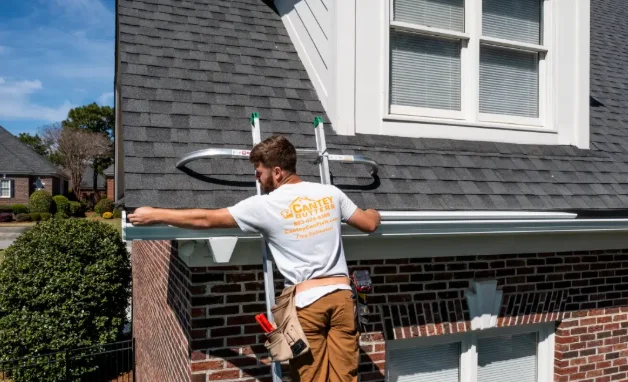
Home needing Affordable gutters in Columbia, SC? Start by weighing price differences alongside material choices and how they go up in your house.
Water runs off your roof, but gutters guide it away. When rain falls heavily – like it often does in Columbia, yearly bringing nearly 4 feet of precipitation – the right setup keeps walls dry. Think about what happens without them: soil erodes, paint peels, floors flood. During sudden thunderstorms, overflow spills down edges meant to stay clear. A solid system handles that load, standing guard through seasons thick with clouds. Without one, trouble follows every storm.
Heavy rains often overwhelm the simple 5-inch gutters on many Columbia houses. Some older setups droop, leak at the joints, or lack full downspout coverage. Overflowing water can collect around the base of a home, leading to possible floods below ground level, washed-out dirt, even harm to support walls. Data from FEMA shows just how common wet basements are – almost all face moisture issues eventually. Gutters built precisely for a roof’s size and local rain intensity keep that from happening.
Columbia Homeowners Choose Custom Gutters
Most folks go with custom gutters because they slide right into place, work better when it rains hard, and last way longer than the usual kind.
Most ready-made section gutters arrive cut to standard sizes. Because they need links and joins, water often escapes after a while. Gutters made just for your house get shaped right there at the location. This leads to less connecting, smoother movement of rainwater, and looks neater along the roofline. Professional gutters in Columbia, SC
Performance matters in Columbia’s climate.
Heavy summer rains test a home’s defenses when skies open nearly three dozen times each season. Downpours intensify in late summer, turning streets into shallow rivers after long spells of wet weather. Gutters built five inches wide catch most runoff, though some rooftops demand broader channels. Six-inch models step in where slopes grow sharp or surfaces stretch too far. Measurements lock in the fit – pitch angle matters just as much as total area above ground level.
Then there’s longevity.
Summer heat in Columbia sticks around, while winter stays soft and brief. When picking what to build with, think long – some things melt fast under that sun. Pick wrong, one upgrade lasts a decade. Choose wise, it stretches past thirty years. Materials live different lives here.
Gutter Materials That Work in Columbia
Some gutters struggle under South Carolina’s sticky summers. Picking the right stuff shapes upkeep needs, price tags, and lifespan of what you install.
Most houses in Columbia go with aluminum gutters. Rain won’t eat them away, they stay light on the roofline, yet hold up fine under long hot stretches. When installed right, continuous pieces can hang strong for two decades or more. A baked-on coating keeps color from washing out – important where sunshine hammers day after day. According to ProMatcher, putting these up across town costs between three seventy-seven and six eighty-three for each foot along the eave. Top gutters in Columbia, SC
Copper stands out as the top choice
Five decades to a century of life span marks its durability, while a shield-like surface forms over time instead. Curb appeal jumps sharply higher because of how it looks on older houses found in places such as Shandon or Forest Hills. Price becomes the catch, though – material alone hits between twenty-seven and forty-five dollars for each foot here around Columbia.
Out in the open, galvanized steel holds up – yet rust waits nearby. A tiny nick? Moisture from Columbia’s damp air will find it fast. Without damage, twenty years is possible. Most won’t make it that far. Price-wise, each foot runs between six forty-three and seven oh four. That’s steeper than aluminum, even though it doesn’t perform as well locally.
Steer clear of vinyl – it’s what you’re better off without
Heat makes it twist out of shape. When sunlight hits it too long, the material cracks easily. Heavy rain from a storm here proves too much to handle. Joints that click together never stay watertight. In gentler weather places, vinyl holds up between ten and two decades. Around these parts, breakdown arrives far earlier.
Custom Gutter Installation Process
Most people think it’s straightforward, yet reality proves otherwise once they start. Success hides in specifics – overlook them and everything breaks down.
Begins by checking every inch of the rooftop edge. Takes exact numbers before moving forward
Figuring out how much material is needed means measuring every foot of edge, tallying up turns, plus marking where each downspout goes – then checking the angle of the roof. Rules in Columbia follow the International Plumbing Code when deciding what size gutters go where. Water moving off the roof determines the width of horizontal sections, since bigger slopes or wider surfaces push more volume through. Slope matters too; steeper roofs speed things along, which changes how fast water flows. Most houses manage fine with five-inch channels, although taller angles or broader rooftops might demand six inches or even wider setups.
Fabrication happens right there where the job is, step by step
Out there where gutters take shape, a special machine pulls aluminum coils straight into custom runs, fitting just right along rooftop borders. Without joints cutting across, these on-site formed pieces stop water sneaking through like it often does with pre-made segments bought off shelves. Sections of pipe meant to carry runoff get measured fresh, then shaped with angled joins and added reach components so flow moves properly away. Ends tie neatly into place without forced fits.
On installation day, crews take out any existing gutters before checking the fascia boards for signs of decay. Hidden hangers go up every two to three feet along the roofline. Slope is built into the gutter system – a quarter-inch drop for every ten feet – guiding water toward downspout locations. These vertical pipes route runoff well away from the house base, aiming for five to ten feet out. Distance follows FEMA advice meant to reduce flood risk in basements.Trusted Gutters in Columbia, SC
Water runs through the system at last, just to be sure everything holds. Connections get a close look, then the team tidies the site. A typical home finishes by nightfall. Roofs with twists or houses that climb higher? Those stretch into day two.
Factors Behind Gutter Prices in Columbia
Price shifts happen for different reasons. What you pay depends on many moving parts. Some pieces add cost, others cut it. Each choice has weight. Hidden details often matter most.
Material is the biggest variable.
A fifth of copper’s price might buy you an entire aluminum setup. Stretching across 150 feet, one metal quietly drains wallets while the other slips under budgets – $1,000 here, nearly seven thousand there.
Big houses need more roofing work. Roof shape changes how hard it is to cover. Size plays a role. So does design detail.
A modest ranch-style house, one with basic triangular ends, usually takes between a hundred and twenty feet of material in straight line measure. Big houses – ones that have several dips where water runs down, little rooftop windows poking up, plus shifts in angle – can easily go past two fifty feet. When the shape gets tricky, it means extra time spent fitting edges, handling angles, planning each step carefully.
Cost shifts depending on how wide the gutters are
Most homes stick with 5-inch gutters because they need fewer materials, which keeps prices down. When heavy rains hit Columbia, though, the extra cost of 6-inch ones – about 15% to 20% more – starts making sense. While K-style looks common on many rooftops, half-round versions usually cost 20% to 30% above that, especially where old-home charm matters.
Where downspouts go affects cost. Water flow paths raise prices too
One extra downspout on top of the required number means another hundred to two hundred dollars. When pipes run below ground – hidden from view – the price jumps a lot.
Choosing a Gutter Company in Columbia
Decades pass, yet this choice still shapes how your house handles rain. Without proper setup, trouble follows – worse than having nothing guiding water away.
Begin by working where you are now.
Out back, a drip edge might sag by late summer if it cannot cope with sticky air thickened by heat. Rain comes hard sometimes here – wide channels move water better when storms pound rooftops soaked for days. Twigs and needles pile up fast under oak limbs, so slope matters just as much as width when guiding runoff away. Folks at places such as WW Gutters have seen what bends, warps, or holds firm after years of muggy swings and sudden downpours. Permits? They know which forms need signing, who checks diagrams, and when inspections happen without delay.
Curious how they make it? That detail matters. Fabrication methods reveal a lot. Maybe bring that up when you talk. Their approach could surprise you
Out there, some crews roll up with pieces already cut. These fit together like puzzle parts, leaving gaps along the way. A real seamless system? Built right where it goes, using a mobile setup. When panels click into place instead of flowing smooth, it is not the custom kind.
Check that gutter measurements are accurate
Start by checking how steep the roof is along with its total area, after that compare findings to IPC Table 1106.6 or similar guidelines. When a worker guesses instead of measuring carefully or applies the same answer every time, they skip necessary steps.
Check warranties.
Aluminum gutters? They’re covered for two decades against material flaws. When it comes to downspouts, thirty years is common. Workmanship protection tends to last between one and three full years. A copper setup might just stay under warranty for half a century.
Ask about gutter guards.
When trees fill Columbia’s landscape, leaves pile up fast. Because of this, gutters need protection built right in – some companies add guards only later, but better ones include them from the start.
Get at least three written estimates.
Start by spelling out the material thickness, along with the width of the gutters. A clear count of downspouts must appear on each estimate. Inclusion of old system removal needs a definite yes or no. Watch for numbers that feel off – prices leaning cheap might mean flimsy metal got swapped in. Fewer spouts than needed? That corner cut shows up most when costs drop suddenly.Best gutters in Columbia, SC
Frequently Asked Questions
Custom Gutter Prices in Columbia SC?
A typical smooth aluminum setup for an average-sized house costs between one thousand and two thousand five hundred dollars. When the place is big or has tricky details, prices might climb as high as five grand. For copper versions, expect numbers from four thousand up past seven thousand. Small fixes usually begin near three hundred bucks.
Steel gutters hold up best when facing Columbia’s weather swings.
Copper holds up fifty to a hundred years, standing strong against rust plus decay. Homeowners usually find seamless aluminum hits the sweet spot – twenty to thirty years of life, fighting off Columbia’s sticky air and baking sun.
Do I need a permit to install gutters in Columbia?
Most of the time, putting in new gutters at a home in Columbia or Richland County won’t need a permit. Yet when changes touch the roof edge or supporting boards, it pays to ask the local building office first.
How Often to Clean Gutters in Columbia?
Cleaning every six months works well – late autumn when leaves are down, then again comes springtime. If your house sits beneath pines, aim for a wipe-down every few months instead
What size gutters do I need for my Columbia home?
Most houses get by just fine with regular 5-inch K-style gutters. When the roof slopes sharply, covers lots of area, or sits where downpours are intense, six-inch versions manage sudden surges of water more effectively, cutting the risk of spilling over.
Installing Gutters on Your Own?
Picking up a sectioned vinyl or aluminum kit at the store might seem straightforward – yet outcomes usually fall short of smooth, expert-installed setups
How do I know if my current gutters are failing?
Check areas where the roof line dips, since that might mean trouble. Water stains down the house walls can signal overflow. Puddles close to the base of the building are worth noting too. If paint is coming off the edges behind the roofline, pay attention. Green growth inside the channels along the edge? That’s a clue
Does Columbia’s heavy rainfall require special gutter features?
Rain falls here nearly two feet each year. When heavy summer bursts arrive, drainage becomes critical. Without enough downspouts, water pools near foundations. Slope matters just as much – flat gutters won’t cut it. Wider channels, like six-inch models, handle runoff better
What are gutter guards, and are they worth it in Columbia?
Water still flows, yet leaves and gunk stay out thanks to gutter guards. These covers mean fewer trips up the ladder since muck builds up slower. Overflow issues? Less likely when clogs can’t form easily
How long does gutter installation take?
One day wraps up most house projects. When houses stretch bigger or roofs twist into odd shapes, another day often slips in. Copper setups made by hand, sealed with melted joints, tend to linger past two.
Will new gutters increase my home value?
Water stays where it should when gutters do their job. Landscaping remains intact thanks to proper drainage paths. Curb appeal rises without soggy edges or stained walls. A working system handles rain before trouble starts
What should I ask a gutter company before hiring them?
Start by checking the thickness of the material used. A contractor’s way of measuring gutter size matters too – ask how it’s done. Downspout count should be confirmed before any agreement. Warranty details often hide surprises, so get them clear up front. Seamless models might look better, but find out if they build those right at your place
Conclusion
Years of rain in Columbia test any house – your gutters take the hit. When storms pass, check them first: look for drips, dips, or water spilling over edges. Talk with nearby experts next; those familiar with the area know what handles humidity plus downpours best. They will guide choices on width and build based on your rooftop’s shape.


